
• Adinbried — It's one thing to read about the exodus of souls flowing out of Eritrea, it's quite another to look into the tired eyes, surrounded by dust and grime, of a 14-year-old Eritrean girl who's just arrived on the Ethiopian side of the shared border.

    She is carrying a scruffy plastic bag. Inside are a few clothes, an orange beaker, and a small torch whose batteries have nearly run out.

    With her are four men, two women and five younger children, all of whom crossed the Eritrea-Ethiopia border the night before. Ethiopian soldiers found them and took them to the town of Adinbried.

    The compound of simple government buildings where they were dropped off constitutes a so-called entry point, one of 12 along the border. It marks the beginning of the bureaucratic and logistical conveyor belt to assign asylum status to those arriving, before finally moving them to one of four refugee camps designated for Eritreans in Ethiopia's Tigray region.

    "It took us four days traveling from Asmara," a 31-year-man among the group says about their trek from the Eritrean capital, about 80 kilometres north of the border. "We travelled for 10 hours each night, sleeping in the desert during the day."

    In February 2017, 3,367 Eritrean refugees arrived in Ethiopia, according to the Ethiopian Administration for Refugee and Returnee Affairs (ARRA). There are around 165,000 Eritrean refugees and asylum seekers in Ethiopia, according to the UN refugee agency.

    Ethiopia's open-door policy is in marked contrast to the strategies of migrant reduction increasingly being adopted in many Western societies.
    Adinbried — It's one thing to read about the exodus of souls flowing out of Eritrea, it's quite another to look into the tired eyes, surrounded by dust and grime, of a 14-year-old Eritrean girl who's just arrived on the Ethiopian side of the shared border. She is carrying a scruffy plastic bag. Inside are a few clothes, an orange beaker, and a small torch whose batteries have nearly run out. With her are four men, two women and five younger children, all of whom crossed the Eritrea-Ethiopia border the night before. Ethiopian soldiers found them and took them to the town of Adinbried. The compound of simple government buildings where they were dropped off constitutes a so-called entry point, one of 12 along the border. It marks the beginning of the bureaucratic and logistical conveyor belt to assign asylum status to those arriving, before finally moving them to one of four refugee camps designated for Eritreans in Ethiopia's Tigray region. "It took us four days traveling from Asmara," a 31-year-man among the group says about their trek from the Eritrean capital, about 80 kilometres north of the border. "We travelled for 10 hours each night, sleeping in the desert during the day." In February 2017, 3,367 Eritrean refugees arrived in Ethiopia, according to the Ethiopian Administration for Refugee and Returnee Affairs (ARRA). There are around 165,000 Eritrean refugees and asylum seekers in Ethiopia, according to the UN refugee agency. Ethiopia's open-door policy is in marked contrast to the strategies of migrant reduction increasingly being adopted in many Western societies.
    ALLAFRICA.COM
    Ethiopia: No Border Wall for Ethiopia, Rather an Open Door - Even for Its Enemy
    It's one thing to read about the exodus of souls flowing out of Eritrea, it's quite another to look into the tired eyes, surrounded by dust and grime, of a 14-year-old Eritrean girl who's just arrived on the Ethiopian side of the shared border.
    0 Comments 0 Shares
  • Egypt's El-Sisi, Ethiopian Premier Confirm Attendance of Nile Summit
    By Frederic Musisi

    Kampala — Egyptian president Abdel-Fattah El-Sisi and Ethiopian premier Hailemariam Desalegne, have both confirmed attendance of the make or break Nile Basin States Summit in Kampala tomorrow. The conference is expected to bring to an end the contention over a new framework for sharing and use of the waters of River Nile.

    Diplomatic sources familiar with the matter told Daily Monitor that the summit, that was initially slated for today, was moved to tomorrow at the request of Ethiopia for yet unknown reasons. This is the third time the meeting has been rescheduled.

    Egypt and Ethiopia have long-standing disputes over the sharing of the Nile waters, a matter that has sucked in other Nile Riparian states of Burundi, Rwanda, DR Congo, Uganda, Kenya, Tanzania, South Sudan, the Sudan, Egypt, and Eritrea, which all share the river's catchment area.

    About River Nile

    Spanning an estimated 4,132 miles long, River Nile is considered the longest river in the world.

    Sources privy to the details of the meeting indicated that the Sudan will be represented by Vice President Hassabo Mohammed Abdurrahman, Burundi by second vice president Joseph Butore, South Sudan by vice president James Wani Igga, Rwanda by the minister of minerals and natural resources Vincent Biruta, and Kenya by water minister Eugene Wamalwa.

    Tanzania will be represented at the summit by foreign affairs minister Augustine Mahiga, and DR Congo by the minister of environment and sustainable development Ambatore Nyongolo.

    President Museveni in March called the summit to arbitrate the matter, maintaining that disagreements that "never come to end are either because of disinformation or misinformation."

    The Riparian States 17 years ago established the Nile Basin Initiative (NBI), an intergovernmental body to iron out differences over sharing of the Nile waters, and in 2010, a new charter known as the Cooperative Framework Agreement (CFA) or the Entebbe Agreement, was adopted to guide a new course of cooperation.

    While Rwanda, Uganda, Burundi, Tanzania, DR Congo, Ethiopia, and Kenya signed the framework, Egypt and the Sudan declined insisting on the pre-colonial agreements which grants them bigger quotas of the Nile waters but which the former interpret[ed] as granting "monopoly" over the river. Egypt signed an agreement with Britain in 1929, while the Sudan signed a similar pact with Britain in 1959; granting them larger quotas of the river flow.

    The Nile's annual volume of flow was estimated at 85 billion cubic metres at the Aswan High Dam by the colonial agreements, which granted Egypt a 75 per cent share (55.5 billion cubic metres) and 25 per cent (18.5 billion cubic metres) to the Sudan with the assumption that the other countries upstream can get water through other sources, including rain or even fresh water lakes.

    Egypt [and the Sudan] declined to sign the CFA specifically over Article 14(b) which requires members "not to significantly affect the water security of any other Nile Basin States."

    What it means

    What this means is that upstream countries; Rwanda, Burundi, Tanzania, Uganda and South Sudan cannot undertake any activities, like irrigation or dam construction, which could significantly affect Egypt's [or Sudan's] allocated water quotas.

    The CFA however allows the upstream countries to undertake activities as long as they consult widely with and notify other members especially those that significantly depend on the river.

    Sudan made U-turn and requested for admission into the CFA leaving Egypt outside alone.

    Politics aside, the stakes over the river are rising every day, especially in light of changing socio-economic dynamics in the Nile basin among others high population growth, climate change, infrastructure development, and environmental degradation.
    Egypt's El-Sisi, Ethiopian Premier Confirm Attendance of Nile Summit By Frederic Musisi Kampala — Egyptian president Abdel-Fattah El-Sisi and Ethiopian premier Hailemariam Desalegne, have both confirmed attendance of the make or break Nile Basin States Summit in Kampala tomorrow. The conference is expected to bring to an end the contention over a new framework for sharing and use of the waters of River Nile. Diplomatic sources familiar with the matter told Daily Monitor that the summit, that was initially slated for today, was moved to tomorrow at the request of Ethiopia for yet unknown reasons. This is the third time the meeting has been rescheduled. Egypt and Ethiopia have long-standing disputes over the sharing of the Nile waters, a matter that has sucked in other Nile Riparian states of Burundi, Rwanda, DR Congo, Uganda, Kenya, Tanzania, South Sudan, the Sudan, Egypt, and Eritrea, which all share the river's catchment area. About River Nile Spanning an estimated 4,132 miles long, River Nile is considered the longest river in the world. Sources privy to the details of the meeting indicated that the Sudan will be represented by Vice President Hassabo Mohammed Abdurrahman, Burundi by second vice president Joseph Butore, South Sudan by vice president James Wani Igga, Rwanda by the minister of minerals and natural resources Vincent Biruta, and Kenya by water minister Eugene Wamalwa. Tanzania will be represented at the summit by foreign affairs minister Augustine Mahiga, and DR Congo by the minister of environment and sustainable development Ambatore Nyongolo. President Museveni in March called the summit to arbitrate the matter, maintaining that disagreements that "never come to end are either because of disinformation or misinformation." The Riparian States 17 years ago established the Nile Basin Initiative (NBI), an intergovernmental body to iron out differences over sharing of the Nile waters, and in 2010, a new charter known as the Cooperative Framework Agreement (CFA) or the Entebbe Agreement, was adopted to guide a new course of cooperation. While Rwanda, Uganda, Burundi, Tanzania, DR Congo, Ethiopia, and Kenya signed the framework, Egypt and the Sudan declined insisting on the pre-colonial agreements which grants them bigger quotas of the Nile waters but which the former interpret[ed] as granting "monopoly" over the river. Egypt signed an agreement with Britain in 1929, while the Sudan signed a similar pact with Britain in 1959; granting them larger quotas of the river flow. The Nile's annual volume of flow was estimated at 85 billion cubic metres at the Aswan High Dam by the colonial agreements, which granted Egypt a 75 per cent share (55.5 billion cubic metres) and 25 per cent (18.5 billion cubic metres) to the Sudan with the assumption that the other countries upstream can get water through other sources, including rain or even fresh water lakes. Egypt [and the Sudan] declined to sign the CFA specifically over Article 14(b) which requires members "not to significantly affect the water security of any other Nile Basin States." What it means What this means is that upstream countries; Rwanda, Burundi, Tanzania, Uganda and South Sudan cannot undertake any activities, like irrigation or dam construction, which could significantly affect Egypt's [or Sudan's] allocated water quotas. The CFA however allows the upstream countries to undertake activities as long as they consult widely with and notify other members especially those that significantly depend on the river. Sudan made U-turn and requested for admission into the CFA leaving Egypt outside alone. Politics aside, the stakes over the river are rising every day, especially in light of changing socio-economic dynamics in the Nile basin among others high population growth, climate change, infrastructure development, and environmental degradation.
    ALLAFRICA.COM
    Africa: Egypt's El-Sisi, Ethiopian Premier to Attend Crucial Nile Summit
    Egyptian president Abdel-Fattah El-Sisi and Ethiopian premier Hailemariam Desalegne, have both confirmed attendance of the make or break Nile Basin States Summit in Kampala tomorrow. The conference is expected to bring to an end the contention over a new framework for sharing and use of the waters of River Nile.
    0 Comments 0 Shares
  • Ethiopian Airlines and Boeing announced a commitment to purchase two 777 Freighters at the 2017 Paris Air Show, valued at $651.4 million at list prices.

    The airline also announced an order for 10 additional 737 MAX 8 airplanes. The 10 737 MAX options being exercised were part of a deal signed in September 2014, completing the largest ever order for the 737 MAX in Africa.

    Ethiopian now has firm orders for 30 737 MAX 8s. The order was previously attributed to an unidentified customer on Boeing’s Orders & Deliveries website.

    “Building one of the largest cargo terminals in the world and operating newgeneration, high-performance aircraft reflects our commitment in expanding and supporting the exponentially growing imports and exports of our country in particular and the African continent in general. The commitment to purchase 2 B777 Freighters is expected to boost the Ethiopian Cargo & Logistics Services,” said Tewolde GebreMariam, GCEO of Ethiopian Airlines.

    “The 737 MAX will form a key component of our strategic roadmap, vision 2025, enhancing our single-aisle fleet and keeping us at the forefront of African aviation. This is a continuation of the longstanding and commendable business partnership we had established with Boeing.” The 777 Freighter, the world’s longest-range twin-engine freighter, is based on the technologically advanced 777-200LR (Longer Range) passenger airplane and can fly 4,900 nautical miles (9,070 kilometers) with a full payload of 112 tons (102 metric tonnes or 102,000 kg).

    “The 777 Freighter’s range capability, combined with its enhanced cargo capacity, makes it the perfect airplane for Ethiopian to continue to profitably grow its global freighter service, linking trade routes between Africa, Europe, the Middle East and Asia,” said Ihssane Mounir senior vice president of Global Sales & Marketing Sales, Boeing Commercial Airplanes.

    “We are also delighted to be able to announce an additional order for 10 737 MAXs. This order is a continued endorsement by Ethiopian of the 737 MAXs efficiency, range, reliability and operating costs.”

    The 737 MAX incorporates the latest technology CFM International LEAP-1B engines, Advanced Technology winglets and other improvements to deliver the highest efficiency, reliability and passenger comfort in the single-aisle market.

    The 737 MAX is the fastest-selling airplane in Boeing history, accumulating more than 3,700 orders from 87 customers worldwide. Ethiopian Airlines (Ethiopian) is the flag carrier of Ethiopia. During the past seventy plus years, Ethiopian has become one of the continent’s leading carriers, unrivalled in Africa for efficiency and operational success, turning profits for almost all the years of its existence.

    Operating at the forefront of technology, the airline has also become one of Ethiopia’s major industries and a veritable institution in Africa. It commands a lion’s share of the pan African network including the daily and double daily east-west flight across the continent. Ethiopian currently serves 100 international and 21 domestic destinations operating the newest and youngest fleet.

    The Boeing 777’s unique combination of superior range, outstanding fuel efficiency and passenger-preferred comfort has created long-range success for carriers around the world, according to Boeing. “The 777-300ER now gives operators a perfect opportunity to extend that success. Recent upgrades further reduce costs and boost revenue, and the 777’s flying experience is still number one with passengers,” the company says.
    Ethiopian Airlines and Boeing announced a commitment to purchase two 777 Freighters at the 2017 Paris Air Show, valued at $651.4 million at list prices. The airline also announced an order for 10 additional 737 MAX 8 airplanes. The 10 737 MAX options being exercised were part of a deal signed in September 2014, completing the largest ever order for the 737 MAX in Africa. Ethiopian now has firm orders for 30 737 MAX 8s. The order was previously attributed to an unidentified customer on Boeing’s Orders & Deliveries website. “Building one of the largest cargo terminals in the world and operating newgeneration, high-performance aircraft reflects our commitment in expanding and supporting the exponentially growing imports and exports of our country in particular and the African continent in general. The commitment to purchase 2 B777 Freighters is expected to boost the Ethiopian Cargo & Logistics Services,” said Tewolde GebreMariam, GCEO of Ethiopian Airlines. “The 737 MAX will form a key component of our strategic roadmap, vision 2025, enhancing our single-aisle fleet and keeping us at the forefront of African aviation. This is a continuation of the longstanding and commendable business partnership we had established with Boeing.” The 777 Freighter, the world’s longest-range twin-engine freighter, is based on the technologically advanced 777-200LR (Longer Range) passenger airplane and can fly 4,900 nautical miles (9,070 kilometers) with a full payload of 112 tons (102 metric tonnes or 102,000 kg). “The 777 Freighter’s range capability, combined with its enhanced cargo capacity, makes it the perfect airplane for Ethiopian to continue to profitably grow its global freighter service, linking trade routes between Africa, Europe, the Middle East and Asia,” said Ihssane Mounir senior vice president of Global Sales & Marketing Sales, Boeing Commercial Airplanes. “We are also delighted to be able to announce an additional order for 10 737 MAXs. This order is a continued endorsement by Ethiopian of the 737 MAXs efficiency, range, reliability and operating costs.” The 737 MAX incorporates the latest technology CFM International LEAP-1B engines, Advanced Technology winglets and other improvements to deliver the highest efficiency, reliability and passenger comfort in the single-aisle market. The 737 MAX is the fastest-selling airplane in Boeing history, accumulating more than 3,700 orders from 87 customers worldwide. Ethiopian Airlines (Ethiopian) is the flag carrier of Ethiopia. During the past seventy plus years, Ethiopian has become one of the continent’s leading carriers, unrivalled in Africa for efficiency and operational success, turning profits for almost all the years of its existence. Operating at the forefront of technology, the airline has also become one of Ethiopia’s major industries and a veritable institution in Africa. It commands a lion’s share of the pan African network including the daily and double daily east-west flight across the continent. Ethiopian currently serves 100 international and 21 domestic destinations operating the newest and youngest fleet. The Boeing 777’s unique combination of superior range, outstanding fuel efficiency and passenger-preferred comfort has created long-range success for carriers around the world, according to Boeing. “The 777-300ER now gives operators a perfect opportunity to extend that success. Recent upgrades further reduce costs and boost revenue, and the 777’s flying experience is still number one with passengers,” the company says.
    0 Comments 0 Shares
  • Angelina Jolie Planning Family Trip To Ethiopia To Celebrate Zahara’s Adoption Date

    Zahara Jolie-Pitt was just six months old when Angelina Jolie adopted her on July 6, 2005. She travelled to Ethiopia with then-boyfriend Brad Pitt, 53, to pick up her new daughter and 12 years later she’s bringing her back to her homeland for the first time. “Angelina is planning a trip to Ethiopia next month to celebrate Zahara’s adoption date. She’s always been very committed to each of the children knowing their birth country, and all about their heritage, so she’s keen for Zahara to spend time there. Angelina will be taking all of the children, and they’re really excited as they all love to travel,” a source close to the 42-year-old actress tells HollywoodLife.com EXCLUSIVELY.
    Angelina Jolie Planning Family Trip To Ethiopia To Celebrate Zahara’s Adoption Date Zahara Jolie-Pitt was just six months old when Angelina Jolie adopted her on July 6, 2005. She travelled to Ethiopia with then-boyfriend Brad Pitt, 53, to pick up her new daughter and 12 years later she’s bringing her back to her homeland for the first time. “Angelina is planning a trip to Ethiopia next month to celebrate Zahara’s adoption date. She’s always been very committed to each of the children knowing their birth country, and all about their heritage, so she’s keen for Zahara to spend time there. Angelina will be taking all of the children, and they’re really excited as they all love to travel,” a source close to the 42-year-old actress tells HollywoodLife.com EXCLUSIVELY.
    Like
    1
    0 Comments 0 Shares
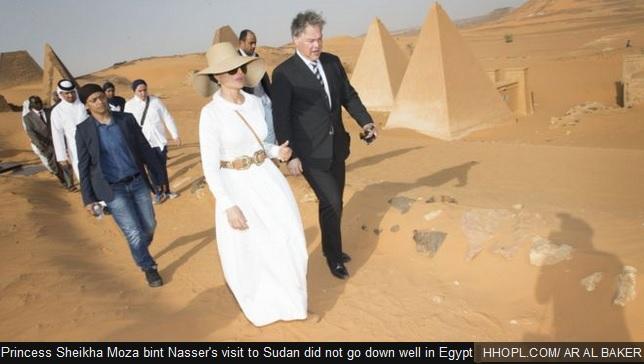
  • Reports that Hollywood star Angeline Jolie is planning to make a movie about Sudan’s history have sparked a row with Egypt, and BBC Africa’s Mohanad Hashim says it is about much more than who has the biggest pyramids.

    The latest twist in a long-running feud between Egyptians and Sudanese is over controversial claims that a film is to be made in Sudan to showcase the country’s contribution to human civilization.

    Various media have reported that a Qatari production company would fund the film, which would apparently feature Hollywood stars Angelina Jolie and Leonardo Di Caprio.

    It is meant to promote historical tourism in Sudan by narrating the country’s ancient Nubian history.
    Reports that Hollywood star Angeline Jolie is planning to make a movie about Sudan’s history have sparked a row with Egypt, and BBC Africa’s Mohanad Hashim says it is about much more than who has the biggest pyramids. The latest twist in a long-running feud between Egyptians and Sudanese is over controversial claims that a film is to be made in Sudan to showcase the country’s contribution to human civilization. Various media have reported that a Qatari production company would fund the film, which would apparently feature Hollywood stars Angelina Jolie and Leonardo Di Caprio. It is meant to promote historical tourism in Sudan by narrating the country’s ancient Nubian history.
    0 Comments 0 Shares
  • Ruth B is the latest Ethiopian-born rising pop star

    Edmonton pop singer Ruth B — short for Berhe — is quick to admit she owes a lot of her career to Vine. And though the short-length social video app has withered away, Berhe’s career has just fully blossomed.

    The 21-year-old got her big break posting six-second song snippets she shot in her bedroom to Vine. The snippets took off and helped her form her breakthrough hit single Lost Boy, which now has more than 52 million views on YouTube.

    Columbia Records signed her in 2015 and Friday marked the release of her debut album, Safe Haven.

    All the accomplishments were feted in her breakthrough artist of the year win at this year’s Junos in April.

    “Growing up that was always my biggest fear … that I wouldn’t be able to break through all the noise,” she told CBC News.

    “I’m from Edmonton. How was anybody ever going to hear about me? So those words are really important to, like, break through everything and get a chance. It’s been amazing.”

    Edmonton her ‘safe haven’

    Though a whole lot has changed professionally for Behre over the two years, she still plans on keeping the life she had before her fame. She graduated from high school in 2013 and was studying at MacEwan University when her career took off — so she put her schooling on a pause.

    When she’s not on the road, Behre continues to live in Edmonton with her parents, both immigrants from Ethiopia.

    “All my friends are like ‘what, you haven’t left yet?’ I’m like, ‘no, I don’t want to.’ Why? I don’t want to learn how to cook,” she jokes.
    Ruth B is the latest Ethiopian-born rising pop star Edmonton pop singer Ruth B — short for Berhe — is quick to admit she owes a lot of her career to Vine. And though the short-length social video app has withered away, Berhe’s career has just fully blossomed. The 21-year-old got her big break posting six-second song snippets she shot in her bedroom to Vine. The snippets took off and helped her form her breakthrough hit single Lost Boy, which now has more than 52 million views on YouTube. Columbia Records signed her in 2015 and Friday marked the release of her debut album, Safe Haven. All the accomplishments were feted in her breakthrough artist of the year win at this year’s Junos in April. “Growing up that was always my biggest fear … that I wouldn’t be able to break through all the noise,” she told CBC News. “I’m from Edmonton. How was anybody ever going to hear about me? So those words are really important to, like, break through everything and get a chance. It’s been amazing.” Edmonton her ‘safe haven’ Though a whole lot has changed professionally for Behre over the two years, she still plans on keeping the life she had before her fame. She graduated from high school in 2013 and was studying at MacEwan University when her career took off — so she put her schooling on a pause. When she’s not on the road, Behre continues to live in Edmonton with her parents, both immigrants from Ethiopia. “All my friends are like ‘what, you haven’t left yet?’ I’m like, ‘no, I don’t want to.’ Why? I don’t want to learn how to cook,” she jokes.
    0 Comments 0 Shares
  • Fashion designer Mafi wins Creative Futures’ competition

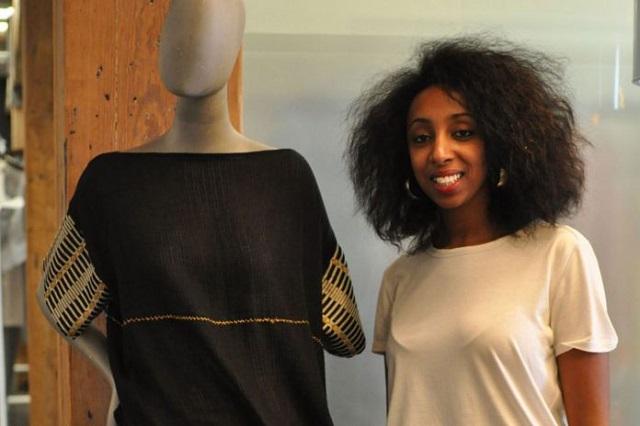
    Mafi, one of Ethiopia’s most recognized designers won a contest organized by Creative Futures. Known to work with exclusively hand woven fabrics, Mafi as a winner of the competition will be showcasing her work at the Hub of Africa 2017, an event that showcases the works of well know as well as up and coming fashion designers, that is set to be held in October.


    The competition was juried by Waridi Schrobsdorff, Founder and CEO Fashion Africa 254, Sara Maino, Senior Editor Vogue Italia and Head of Vogue Talents and Julia Sattler, Director Goethe-Institut Addis Abeba.

    Mafi’s ability to use only traditional materials while at the same time making it appeal to the modern women and the fact that she has already developed her own signature for her work is one of the reasons she won the contest.

    “Mafi’s interpretation of African tradition and colors is transformed in a modern vision that can be worn daily,” Sara Maino, Senior Editor Vogue Italia and Head of Vogue Talents. Director of the Goethe-Institut Addis Ababa also stated that “Our aim is to connect people. Mafi and an international buyer – we are excited to see where this combination will lead us to.”

    Mafi creates clothing and accessories which are fresh and cutting-edge and at the same time very wearable. Working with hand-woven fabrics is a way for Mafi to give back and to support women weavers who are often marginalized within the male-dominated weaving community.

    The connection between hand-woven fabrics and Ethiopian culture and history is something Mafi explores in her work. Culture and tradition can sometimes become as essential and as invisible as air. Pushing herself creatively Mafi produces contemporary pieces with ancient fabrics, giving visibility to the diversity and depth of Ethiopian culture and tradition.

    Source: capitalethiopia
    Fashion designer Mafi wins Creative Futures’ competition Mafi, one of Ethiopia’s most recognized designers won a contest organized by Creative Futures. Known to work with exclusively hand woven fabrics, Mafi as a winner of the competition will be showcasing her work at the Hub of Africa 2017, an event that showcases the works of well know as well as up and coming fashion designers, that is set to be held in October. The competition was juried by Waridi Schrobsdorff, Founder and CEO Fashion Africa 254, Sara Maino, Senior Editor Vogue Italia and Head of Vogue Talents and Julia Sattler, Director Goethe-Institut Addis Abeba. Mafi’s ability to use only traditional materials while at the same time making it appeal to the modern women and the fact that she has already developed her own signature for her work is one of the reasons she won the contest. “Mafi’s interpretation of African tradition and colors is transformed in a modern vision that can be worn daily,” Sara Maino, Senior Editor Vogue Italia and Head of Vogue Talents. Director of the Goethe-Institut Addis Ababa also stated that “Our aim is to connect people. Mafi and an international buyer – we are excited to see where this combination will lead us to.” Mafi creates clothing and accessories which are fresh and cutting-edge and at the same time very wearable. Working with hand-woven fabrics is a way for Mafi to give back and to support women weavers who are often marginalized within the male-dominated weaving community. The connection between hand-woven fabrics and Ethiopian culture and history is something Mafi explores in her work. Culture and tradition can sometimes become as essential and as invisible as air. Pushing herself creatively Mafi produces contemporary pieces with ancient fabrics, giving visibility to the diversity and depth of Ethiopian culture and tradition. Source: capitalethiopia
    Like
    2
    0 Comments 0 Shares
  • 0 Comments 0 Shares