


0 Comments
0 Shares

Directory
-
-
#Ethiopian #Airlines has placed an order for 10 Airbus A350-900 passenger jets, it said on Tuesday, in addition to at least another 10 it already has on order.
Separately, Boeing and Bombardier said the airline had also ordered aircraft from them.
The A350-900s will be deployed on Ethiopian's long haul routes connecting Addis Ababa with destinations in Africa, Europe, the Middle East and Asia, Chief Executive Tewolde GebreMariam said in a statement.
READ: African economies urged to form airline alliances
The state-owned carrier is ranked the largest in Africa by revenue and profit by the International Air Transport Association (IATA), the global industry body.
Boeing said Ethiopian had signed a commitment to buy two 777 freighters in an order valued at $651.4 million at list prices.
It added the airline had also ordered another 10 737 MAX 8 planes, exercising options from a 2014 order, bringing Ethiopian's total orders for 737 MAX 8s to 30.
Bombardier, meanwhile, said Ethiopian had signed a purchase agreement for an additional five of its Q400 turboprop aircraft.
In February, Tewolde told Reuters that Ethiopian's revenue rose 10.3 per cent to 54.5 billion birr ($2.43 billion) in the 2015/16 fiscal year, while passenger numbers climbed 18 per cent to 7.6 million.
Net profit was up 70 percent at 6 billion birr.
Ethiopian wants to increase revenue to $10 billion by 2025 and expand its fleet to 140 aircraft from less than 90 now, with sights set on Asia.#Ethiopian #Airlines has placed an order for 10 Airbus A350-900 passenger jets, it said on Tuesday, in addition to at least another 10 it already has on order. Separately, Boeing and Bombardier said the airline had also ordered aircraft from them. The A350-900s will be deployed on Ethiopian's long haul routes connecting Addis Ababa with destinations in Africa, Europe, the Middle East and Asia, Chief Executive Tewolde GebreMariam said in a statement. READ: African economies urged to form airline alliances The state-owned carrier is ranked the largest in Africa by revenue and profit by the International Air Transport Association (IATA), the global industry body. Boeing said Ethiopian had signed a commitment to buy two 777 freighters in an order valued at $651.4 million at list prices. It added the airline had also ordered another 10 737 MAX 8 planes, exercising options from a 2014 order, bringing Ethiopian's total orders for 737 MAX 8s to 30. Bombardier, meanwhile, said Ethiopian had signed a purchase agreement for an additional five of its Q400 turboprop aircraft. In February, Tewolde told Reuters that Ethiopian's revenue rose 10.3 per cent to 54.5 billion birr ($2.43 billion) in the 2015/16 fiscal year, while passenger numbers climbed 18 per cent to 7.6 million. Net profit was up 70 percent at 6 billion birr. Ethiopian wants to increase revenue to $10 billion by 2025 and expand its fleet to 140 aircraft from less than 90 now, with sights set on Asia.0 Comments 0 Shares -
ADDIS ABABA, June 21 (BERNAMA-NNN-ENA) -- Kuwait's ruler, Sheikh Sabah Al-Ahmad Al-Jaber Al-Sabahof, has granted an amnesty for Ethiopian nationals convicted of crimes in the Gulf nation, the Ministry of Foreign Affairs says.
The amnesty was granted following intervention by Ethiopian Prime Minister Hailemariam Dessalegn, who requested Sheikh Sabah Al-Ahmad Al-Jaber Al-Sabah to show clemency to imprisoned Ethiopian nationals.
Foreign Minister Dr. Workneh Gebeyehu, who is in Kuwait on a working visit, has expressed his gratitude to the Emir on behalf of himself, the people and government of Ethiopia, the foreign ministry said in a statement here.
Dr. Workneh also held discussions with the Emir on bilateral issues and expressed Ethiopia's desire for the diplomatic resolution of the dispute between Qatar and its neighbouring Gulf States.
He told Sheikh Sabah Al-Ahmad Al-Jaber Al-Sabah that Ethiopia supports Kuwait's diplomatic initiative in this regard and has the desire to contribute its share to the success of the endeavour.
The Emir, who recalled that Ethiopia has been a friend of the Arab world, and of Kuwait in particular, appreciated the country for being the leading African country extending support for dialogue.
He also praised Ethiopia for its sustained efforts to create peace and stability in the Horn of Africa and expressed Kuwait's interest to enhance relation of the two nations.ADDIS ABABA, June 21 (BERNAMA-NNN-ENA) -- Kuwait's ruler, Sheikh Sabah Al-Ahmad Al-Jaber Al-Sabahof, has granted an amnesty for Ethiopian nationals convicted of crimes in the Gulf nation, the Ministry of Foreign Affairs says. The amnesty was granted following intervention by Ethiopian Prime Minister Hailemariam Dessalegn, who requested Sheikh Sabah Al-Ahmad Al-Jaber Al-Sabah to show clemency to imprisoned Ethiopian nationals. Foreign Minister Dr. Workneh Gebeyehu, who is in Kuwait on a working visit, has expressed his gratitude to the Emir on behalf of himself, the people and government of Ethiopia, the foreign ministry said in a statement here. Dr. Workneh also held discussions with the Emir on bilateral issues and expressed Ethiopia's desire for the diplomatic resolution of the dispute between Qatar and its neighbouring Gulf States. He told Sheikh Sabah Al-Ahmad Al-Jaber Al-Sabah that Ethiopia supports Kuwait's diplomatic initiative in this regard and has the desire to contribute its share to the success of the endeavour. The Emir, who recalled that Ethiopia has been a friend of the Arab world, and of Kuwait in particular, appreciated the country for being the leading African country extending support for dialogue. He also praised Ethiopia for its sustained efforts to create peace and stability in the Horn of Africa and expressed Kuwait's interest to enhance relation of the two nations.0 Comments 0 Shares -
Chinese business delegation sparkles at Ethiopia
ADDIS ABABA - A delegation of 70 companies from Shenzhen city, China's innovation hub, is attending a show in Ethiopia's capital Addis Ababa and locals are thrilled about the ample business opportunities on the horizon.
The delegation is in the east African country for the China (Shenzhen) Trade and Investment Promotion Meeting and Shenzhen Products show from Monday to Tuesday.
Lu Pengqi, Vice Chairman of China Council for the Promotion of International Trade (CCPTI) says there is good reason why business delegation from Shenzhen will attract attention.
"With Shenzhen's Gross Domestic Product (GDP) reaching at $283 billion in 2016 and GDP per capita standing at $25,000, the city is one of China's most developed and richest," Lu said.
Shenzhen transformed from little more than a fishing village to "China's Silicon Valley" in less than 40 years. It is home to a population of nearly 12 million and more than 5,300 Chinese enterprises including tech giants Huawei, ZTE, and Tencent, which in total have made overseas investments estimated at $80 billion.
While trade relations between Ethiopia and its top trading partner China has reached $3.6 billion in 2016, investment from Shenzhen city and Guangdong province to Ethiopia still lags compared to other Chinese provinces, says Tadesse Haile, Ethiopia's state Minister of Industry.
"Ethiopia offers Shenzhen a huge market as a next best destination in Africa, complemented by its desire to be a leading light manufacturing hub and middle income economy by 2025," says Haile.
Ethiopia's state minister of Industry was in particular referring to Shenzhen's reputation for knowledge intensive industries in addition to labor intensive industries like Textile and leather.
With Shenzhen popularly called China's "Silicon valley" for its reputation as innovation and entrepreneurship center, Ethiopia plans to tap its Information Communications Technology (ICT) ambitions on experiences from the likes of this entrepreneurial Chinese city.
The East African nation with a population of about 100 million, is focusing on labor intensive industries like textiles and leather to give its 45 million workforce mass employment while hoping ICT will give it a technological edge.
Already Chinese government is facilitating business capacity training and management skills to Ethiopian business community and experts.
It is hoped that this will help in fostering technological innovation and creative talent as a springboard for competitive export to the global economy.
Ethiopia hopes to transform its largely agrarian economy with manufacturing taking 50 percent share of GDP, creating annually 2 million job opportunity for youth.
"Ethiopia is at a crossroads between the Middle East, Africa and Asia giving access to wide market and huge human capacity as well as capable of creating large job opportunity," says Afework Solomon, President of Ethiopia's Chamber of Commerce and Sectoral Associations (ECSA).
Fitsum Arega, Commissioner of the state owned Ethiopian Investment Commission (EIC) points to another advantage the country has to attract Shenzhen investors.
"Ethiopia has constructed, is constructing or plans to construct 13 industrial zones across the country using Chinese expertise and companies for the most part," he says.
Arega also points labor cost being 10 times cheaper than Shenzhen, companies can invest in sectors like textile and apparel and be assured of good return on their investments.
Already Ethiopia gives a 10-15 years tax holiday on companies investing in its industry parks while giving access to duty free European and US markets.
Arega further spoke about Ethiopia's ambitions in energy sector, requesting Shenzhen's experience in particular with solar and wind projects.
Ethiopia is currently undertaking large solar, wind, hydro and geothermal projects with a plan to increase its electricity generation capacity from current 4,200 MW to 17,300 MW by 2020.
While the first day of the trade and investment promotion meeting focused on hard statistics there was another reason, Ethiopian business people and officials welcome investment from Chinese cities like Shenzhen.
"Ethiopia feels at ease with Chinese businesses with China's economic achievement of becoming the world's second biggest economy in a short time being an inspiration," says Solomon.
That ease has translated into Chinese exports accounting for about 87 percent of Ethiopia's import in 2013.
It has also meant that between 1992-2014, 814 Chinese private companies' invested and commissioned projects valued at $1.6 billion.Chinese business delegation sparkles at Ethiopia ADDIS ABABA - A delegation of 70 companies from Shenzhen city, China's innovation hub, is attending a show in Ethiopia's capital Addis Ababa and locals are thrilled about the ample business opportunities on the horizon. The delegation is in the east African country for the China (Shenzhen) Trade and Investment Promotion Meeting and Shenzhen Products show from Monday to Tuesday. Lu Pengqi, Vice Chairman of China Council for the Promotion of International Trade (CCPTI) says there is good reason why business delegation from Shenzhen will attract attention. "With Shenzhen's Gross Domestic Product (GDP) reaching at $283 billion in 2016 and GDP per capita standing at $25,000, the city is one of China's most developed and richest," Lu said. Shenzhen transformed from little more than a fishing village to "China's Silicon Valley" in less than 40 years. It is home to a population of nearly 12 million and more than 5,300 Chinese enterprises including tech giants Huawei, ZTE, and Tencent, which in total have made overseas investments estimated at $80 billion. While trade relations between Ethiopia and its top trading partner China has reached $3.6 billion in 2016, investment from Shenzhen city and Guangdong province to Ethiopia still lags compared to other Chinese provinces, says Tadesse Haile, Ethiopia's state Minister of Industry. "Ethiopia offers Shenzhen a huge market as a next best destination in Africa, complemented by its desire to be a leading light manufacturing hub and middle income economy by 2025," says Haile. Ethiopia's state minister of Industry was in particular referring to Shenzhen's reputation for knowledge intensive industries in addition to labor intensive industries like Textile and leather. With Shenzhen popularly called China's "Silicon valley" for its reputation as innovation and entrepreneurship center, Ethiopia plans to tap its Information Communications Technology (ICT) ambitions on experiences from the likes of this entrepreneurial Chinese city. The East African nation with a population of about 100 million, is focusing on labor intensive industries like textiles and leather to give its 45 million workforce mass employment while hoping ICT will give it a technological edge. Already Chinese government is facilitating business capacity training and management skills to Ethiopian business community and experts. It is hoped that this will help in fostering technological innovation and creative talent as a springboard for competitive export to the global economy. Ethiopia hopes to transform its largely agrarian economy with manufacturing taking 50 percent share of GDP, creating annually 2 million job opportunity for youth. "Ethiopia is at a crossroads between the Middle East, Africa and Asia giving access to wide market and huge human capacity as well as capable of creating large job opportunity," says Afework Solomon, President of Ethiopia's Chamber of Commerce and Sectoral Associations (ECSA). Fitsum Arega, Commissioner of the state owned Ethiopian Investment Commission (EIC) points to another advantage the country has to attract Shenzhen investors. "Ethiopia has constructed, is constructing or plans to construct 13 industrial zones across the country using Chinese expertise and companies for the most part," he says. Arega also points labor cost being 10 times cheaper than Shenzhen, companies can invest in sectors like textile and apparel and be assured of good return on their investments. Already Ethiopia gives a 10-15 years tax holiday on companies investing in its industry parks while giving access to duty free European and US markets. Arega further spoke about Ethiopia's ambitions in energy sector, requesting Shenzhen's experience in particular with solar and wind projects. Ethiopia is currently undertaking large solar, wind, hydro and geothermal projects with a plan to increase its electricity generation capacity from current 4,200 MW to 17,300 MW by 2020. While the first day of the trade and investment promotion meeting focused on hard statistics there was another reason, Ethiopian business people and officials welcome investment from Chinese cities like Shenzhen. "Ethiopia feels at ease with Chinese businesses with China's economic achievement of becoming the world's second biggest economy in a short time being an inspiration," says Solomon. That ease has translated into Chinese exports accounting for about 87 percent of Ethiopia's import in 2013. It has also meant that between 1992-2014, 814 Chinese private companies' invested and commissioned projects valued at $1.6 billion.0 Comments 0 Shares -
-
ADDIS ABABA, June 22 (Xinhua) -- Visiting Chinese Foreign Minister Wang Yi on Wednesday highlighted the importance of implementing the comprehensive strategic partnership of cooperation between China and Ethiopia when holding talks with Ethiopian Prime Minister Hailemariam Desalegn here.
Under the leaderships of the two countries, China-Ethiopia relations have seen comprehensive and rapid development in the recent years, Wang said.
The foreign minister expressed China's keen interest to deepen China-Ethiopia cooperation in six priority areas: exchanges on governing a state, peace and security, capacity cooperation, human resources, aviation and coordination on global and regional issues.
For his part, Hailemariam said Ethiopia is willing to take the Belt and Road Initiative as an opportunity to speed up the transformation of the Ethiopian economy.
The Belt and Road Initiative proposed by China in 2013 consists of the Silk Road Economic Belt and the 21st Century Maritime Silk Road. It aims to build a trade and infrastructure network connecting Asia with Europe and Africa along and beyond the ancient Silk Road trade routes.
Becoming China's comprehensive strategic partner of cooperation has injected an important impetus into the development of the bilateral relations, he said.
The prime minister also commended China for its long-standing support for Ethiopia and fully agreed on the six priority areas of cooperation proposed by the Chinese side.ADDIS ABABA, June 22 (Xinhua) -- Visiting Chinese Foreign Minister Wang Yi on Wednesday highlighted the importance of implementing the comprehensive strategic partnership of cooperation between China and Ethiopia when holding talks with Ethiopian Prime Minister Hailemariam Desalegn here. Under the leaderships of the two countries, China-Ethiopia relations have seen comprehensive and rapid development in the recent years, Wang said. The foreign minister expressed China's keen interest to deepen China-Ethiopia cooperation in six priority areas: exchanges on governing a state, peace and security, capacity cooperation, human resources, aviation and coordination on global and regional issues. For his part, Hailemariam said Ethiopia is willing to take the Belt and Road Initiative as an opportunity to speed up the transformation of the Ethiopian economy. The Belt and Road Initiative proposed by China in 2013 consists of the Silk Road Economic Belt and the 21st Century Maritime Silk Road. It aims to build a trade and infrastructure network connecting Asia with Europe and Africa along and beyond the ancient Silk Road trade routes. Becoming China's comprehensive strategic partner of cooperation has injected an important impetus into the development of the bilateral relations, he said. The prime minister also commended China for its long-standing support for Ethiopia and fully agreed on the six priority areas of cooperation proposed by the Chinese side.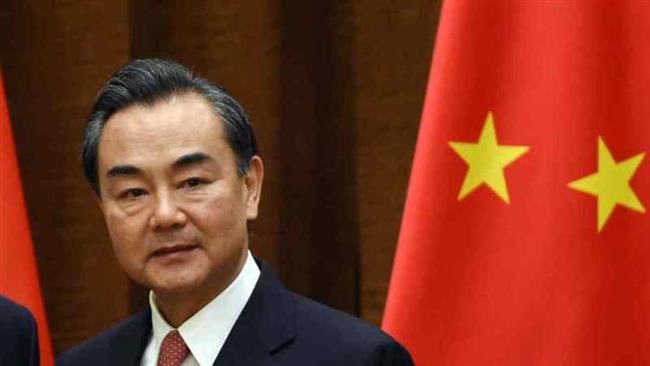 0 Comments 0 Shares


 Amharic