

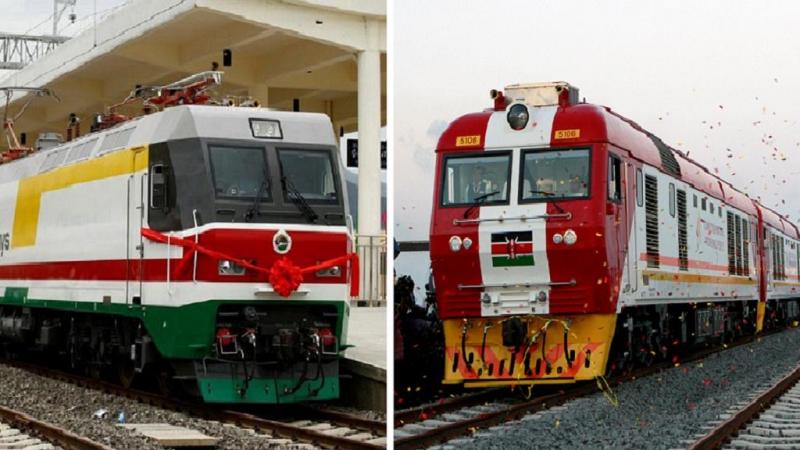
East Africa plays host to two of the continent’s most modernized rail transport system. Regional economic giants, Kenya and Ethiopia have both launched Standard Gauge Railways (SGR) in less than year.
Both SGRs underscore the deepening Sino-Africa engagement given that both were predominantly financed and built by the Chinese. Both countries primarily aim to boost transport (passenger) and trade (cargo) through the tracks.
Beyond the similarities, here are some key differences between the two multi-million dollar projects which will undoubtedly boost the respective economies of both countries.
The Addis Ababa – Djibouti rail line
1. It is an international rail line linking the Ethiopian capital Addis Ababa to the Red Sea state of Djibouti.
2. It was launched in October 2016 and is 756 km long.
3. The cost of the project is pegged at $3.4 billion predominantly financed by China Exim Bank (70%) and the Ethiopian government.
4. Ethiopia’s rail line is powered by electricity which makes it more expensive to run. The electrified double-track is expected to slash the journey time between the two countries to under 10 hours.
5. It is the single biggest project aimed at opening up landlocked Ethiopia – an economic giant of the East Africa region.
6. The two countries (Ethiopia, Djibouti) have instituted a joint company to run the railline.
READ MORE
Ethiopia launches new railway to Djibouti
The Mombasa – Nairobi rail line
1. The Kenyan rail connects the capital, Nairobi, to the port city of Mombasa, making it more of an internal rail line.
2. It is reputed as Kenya’s biggest infrastructure project since it attained independence over five decades ago.
3. It is costed at $3.2 billion despite being 250km less than that of Ethiopia. Each kilometer of the track alone is believed to cost $5.6m.
4. It is a 506km rail line also financed by the Chinese.
5. The rail line is to be powered by fuel, i.e. diesel.
6. The government explains that it will handle more cargo as compared to that of Ethiopia.
Both SGRs underscore the deepening Sino-Africa engagement given that both were predominantly financed and built by the Chinese. Both countries primarily aim to boost transport (passenger) and trade (cargo) through the tracks.
Beyond the similarities, here are some key differences between the two multi-million dollar projects which will undoubtedly boost the respective economies of both countries.
The Addis Ababa – Djibouti rail line
1. It is an international rail line linking the Ethiopian capital Addis Ababa to the Red Sea state of Djibouti.
2. It was launched in October 2016 and is 756 km long.
3. The cost of the project is pegged at $3.4 billion predominantly financed by China Exim Bank (70%) and the Ethiopian government.
4. Ethiopia’s rail line is powered by electricity which makes it more expensive to run. The electrified double-track is expected to slash the journey time between the two countries to under 10 hours.
5. It is the single biggest project aimed at opening up landlocked Ethiopia – an economic giant of the East Africa region.
6. The two countries (Ethiopia, Djibouti) have instituted a joint company to run the railline.
READ MORE
Ethiopia launches new railway to Djibouti
The Mombasa – Nairobi rail line
1. The Kenyan rail connects the capital, Nairobi, to the port city of Mombasa, making it more of an internal rail line.
2. It is reputed as Kenya’s biggest infrastructure project since it attained independence over five decades ago.
3. It is costed at $3.2 billion despite being 250km less than that of Ethiopia. Each kilometer of the track alone is believed to cost $5.6m.
4. It is a 506km rail line also financed by the Chinese.
5. The rail line is to be powered by fuel, i.e. diesel.
6. The government explains that it will handle more cargo as compared to that of Ethiopia.
East Africa plays host to two of the continent’s most modernized rail transport system. Regional economic giants, Kenya and Ethiopia have both launched Standard Gauge Railways (SGR) in less than year.
Both SGRs underscore the deepening Sino-Africa engagement given that both were predominantly financed and built by the Chinese. Both countries primarily aim to boost transport (passenger) and trade (cargo) through the tracks.
Beyond the similarities, here are some key differences between the two multi-million dollar projects which will undoubtedly boost the respective economies of both countries.
The Addis Ababa – Djibouti rail line
1. It is an international rail line linking the Ethiopian capital Addis Ababa to the Red Sea state of Djibouti.
2. It was launched in October 2016 and is 756 km long.
3. The cost of the project is pegged at $3.4 billion predominantly financed by China Exim Bank (70%) and the Ethiopian government.
4. Ethiopia’s rail line is powered by electricity which makes it more expensive to run. The electrified double-track is expected to slash the journey time between the two countries to under 10 hours.
5. It is the single biggest project aimed at opening up landlocked Ethiopia – an economic giant of the East Africa region.
6. The two countries (Ethiopia, Djibouti) have instituted a joint company to run the railline.
READ MORE
Ethiopia launches new railway to Djibouti
The Mombasa – Nairobi rail line
1. The Kenyan rail connects the capital, Nairobi, to the port city of Mombasa, making it more of an internal rail line.
2. It is reputed as Kenya’s biggest infrastructure project since it attained independence over five decades ago.
3. It is costed at $3.2 billion despite being 250km less than that of Ethiopia. Each kilometer of the track alone is believed to cost $5.6m.
4. It is a 506km rail line also financed by the Chinese.
5. The rail line is to be powered by fuel, i.e. diesel.
6. The government explains that it will handle more cargo as compared to that of Ethiopia.


 Amharic